What Is an Overbite?
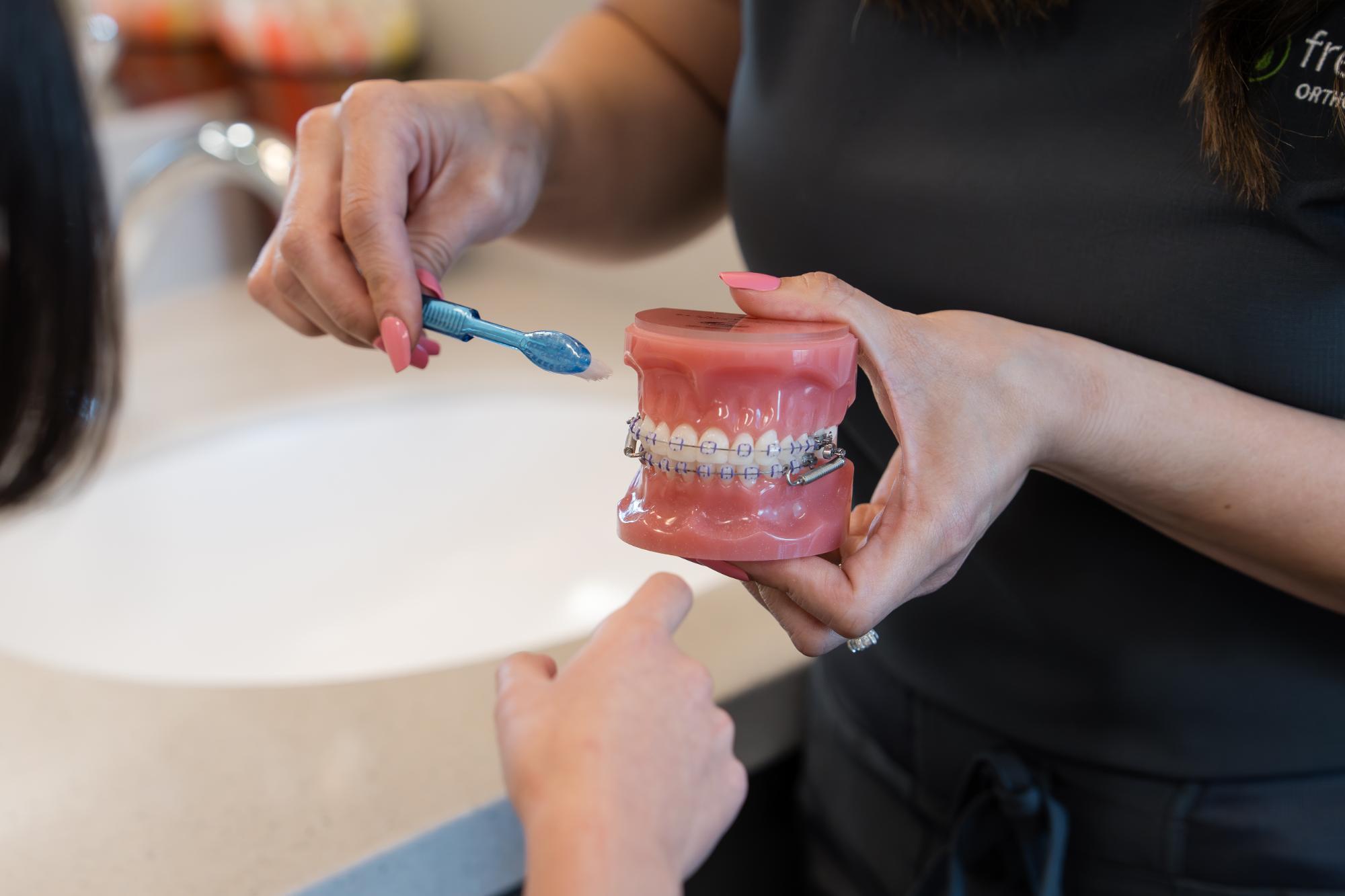
An overbite is the vertical overlap of your upper front teeth over your lower front teeth when your mouth is closed. A small overbite of about 2-4mm is normal and healthy, but when the overlap becomes excessive, it’s called a deep bite. Overbites can be dental (caused by tooth position) or skeletal (caused by jaw structure), and they’re one of the most common bite issues we see at Freytag Orthodontics among clients across Oro Valley and Marana.
Some overbites are mild and cosmetic. Others cause real problems with chewing, jaw comfort, and long-term tooth wear. The good news? Almost every type of overbite can be corrected with the right plan. Whether the overlap is slight or severe, an orthodontist can identify exactly what’s happening and how to fix it. Dr. Freytag, an experienced orthodontist, looks closely at both the position of your teeth and the structure of your jaw to figure out what’s driving the bite issue in the first place.
What Causes an Overbite?
Overbites usually develop from a mix of genetics and habits. Some people inherit a small lower jaw or a mismatch in jaw size from their parents. Others develop bite issues over time from childhood behaviors or dental changes.
Here are the most common causes:
- Genetics. If a parent has a deep bite or a small lower jaw, their child often does too. Jaw shape and tooth size are largely inherited.
- Thumb sucking and pacifier use. Prolonged thumb sucking or bottle use past age 3 can push the front teeth forward and change how the jaws grow together.
- Tongue thrusting. When the tongue pushes against the teeth during swallowing or speaking, it can shift teeth out of alignment over time.
- Finger sucking and nail biting. Repeated pressure on the front teeth creates gaps and tips teeth forward.
- Teeth grinding (bruxism). Chronic grinding wears down the lower teeth, which can deepen the overbite as the upper teeth start to cover more of the lowers.
- Missing, crowded, or extra teeth. When teeth don’t have room or are lost too early, the bite can collapse and the front teeth may overlap more.
- Jaw development imbalances. If the upper and lower jaws grow at different rates, the bite ends up off. This is the skeletal type of overbite and often shows up in childhood.
In many cases, more than one factor is at play. That’s why a proper exam matters so much; the cause shapes the fix.
Symptoms and Complications of an Overbite
A deep overbite often shows up as jaw pain, trouble chewing, worn or chipped front teeth, speech changes, and a noticeable overlap where the upper teeth hide most of the lowers. A small overbite usually doesn’t cause any trouble, but a deeper one can affect how you eat, speak, and feel about your smile.
Common symptoms include:
- Jaw pain or soreness, especially in the morning
- Difficulty chewing certain foods
- Speech issues like a lisp or trouble with certain sounds
- Noticeable overlap where the upper teeth cover most of the lowers
- Worn, chipped, or flattened front teeth
- Lower teeth biting into the roof of the mouth
- Headaches or clicking in the jaw joint
Left untreated, a deep overbite can lead to bigger problems down the road. Excessive tooth wear is a big one. When teeth grind against each other in the wrong spots, the enamel breaks down and teeth can crack or chip. Gum tissue can also get damaged when lower teeth hit the gums behind the upper front teeth.
Some clients also develop TMJ (temporomandibular joint) issues, which cause jaw clicking, popping, and chronic pain. Because crowded or overlapping teeth are harder to clean, cavities and gum disease become more likely too. In more severe cases, an overbite may also contribute to mouth breathing and disrupted sleep.
And let’s be honest: the way your smile looks matters. Many adults come to us simply because they want to smile with confidence again. A bite that’s been bothering them for years often turns out to be easier to correct than they expected.
Overbite vs. Overjet: What’s the Difference?
It’s easy to mix up overbite with overjet, but the two are different. An overbite is vertical, and an overjet is horizontal. An overbite is how much your upper front teeth cover your lower front teeth from top to bottom when you bite down. An overjet is how far your upper teeth stick out past your lower teeth from front to back. Both are measured in millimeters, and a person can have one, the other, or both at the same time.
| Feature | Overbite | Overjet |
|---|---|---|
| Direction | Vertical (up and down) | Horizontal (front to back) |
| Definition | Upper teeth overlap lowers | Upper teeth protrude past lowers |
| Appearance | Lower teeth hidden behind uppers | Upper teeth “stick out” |
| Normal range | 2-4mm of overlap | 1-2mm of protrusion |
| Common name | Deep bite (when severe) | “Buck teeth” (when severe) |
The distinction matters because the fix is different. A deep overbite often needs to be opened up by moving the upper or lower teeth vertically. An overjet usually needs the front teeth pulled back or the lower jaw brought forward. Treatment plans for each look very different, even though both can be corrected with Invisalign or braces.
Dr. Freytag will measure both during your free exam so your personalized plan with a predicted treatment roadmap targets the right issue.
Treatment Options and Cost Factors for Overbite Correction
The good news: most overbites respond well to orthodontic treatment. The right option depends on your age, the severity of the overbite, and whether the issue is dental or skeletal.
Common treatment options at Freytag Orthodontics:
- Invisalign. Clear, removable aligners that gradually shift teeth into place. A great choice for mild to moderate overbites in teens and adults who want a discreet option.
- Metal braces. Classic, with a modern twist. Strong, reliable, and effective for almost every type of overbite, including more complex cases.
- Ceramic braces. Made from tooth-colored composite material so they blend in with your smile. A popular pick for adults and teens who want braces that are less noticeable.
For growing children, early treatment may include growth modification appliances that guide the jaw into a better position before all the permanent teeth come in. For adults with a severe skeletal overbite, jaw surgery is sometimes recommended in combination with braces, though most cases can be handled with orthodontics alone.
Factors that affect the cost of overbite treatment:
- Severity of the overbite (mild vs. deep bite)
- Whether the issue is dental or skeletal
- Type of treatment chosen (Invisalign, metal, or ceramic braces)
- Age of the patient and whether jaw growth is complete
- Length of treatment (typically 12-24 months)
- Retainers and follow-up visits
- Insurance coverage
We offer affordable payment options at Freytag Orthodontics, including interest-free financing and no-down-payment plans for families across Oro Valley and Marana. Your free exam includes a cost breakdown so you know exactly what to expect.
When to See an Orthodontist About an Overbite
You should see an orthodontist about an overbite if you’re experiencing jaw pain, trouble chewing, worn teeth, or you don’t like how your smile looks. For children, the American Association of Orthodontists recommends a first orthodontic evaluation by age 7, even if no problem is obvious. Adults are also great candidates; it’s never too late to correct an overbite.
Early evaluation in kids doesn’t always mean early treatment. Sometimes Dr. Freytag, a skilled orthodontist, will simply monitor jaw growth and intervene at the right moment. Catching an overbite during growth often means a shorter, simpler treatment later on, and in some cases avoids the need for tooth extractions or surgery entirely.
For adults, treatment works just as well, it may just take a little longer since jaw growth is already complete. Many of our adult clients across Oro Valley and Marana choose Invisalign because it fits easily into their lives.
A free exam at Freytag Orthodontics is the easiest way to find out where you stand. Dr. Freytag will measure your overbite, take digital scans, and walk you through your options with no pressure and no commitment. Your smile is just the start.

Frequently Asked Questions About Overbites
Can an overbite fix itself without treatment?
No, an overbite will not correct itself in adults, and it rarely improves on its own in children once permanent teeth have come in. In some young children, mild overbites can lessen as the jaw grows, especially if habits like thumb sucking are stopped early. But moderate to severe overbites need orthodontic treatment to fully correct.
How long does it take to correct an overbite?
Most overbite treatments take 12-24 months, depending on the severity and the treatment method. Mild cases treated with Invisalign may finish faster, while complex skeletal overbites can take longer. Dr. Freytag will give you a predicted timeline at your free exam so you know exactly what to expect.
Can Invisalign fix an overbite?
Yes, Invisalign can fix mild to moderate overbites in both teens and adults. The aligners gradually shift the teeth into the right position, and small attachments or elastics may be used to help correct the bite. For severe deep bites or skeletal issues, braces or a combination approach may work better.
Is an overbite bad for your health?
A small overbite is normal and healthy. A deep overbite, though, can lead to excessive tooth wear, gum damage, jaw pain, TMJ disorders, and a higher risk of cavities from harder-to-clean teeth. Correcting a deep overbite protects your long-term oral health and helps you eat and speak more comfortably.
What is a normal overbite measurement?
A normal overbite is about 2-4mm of vertical overlap, where the upper front teeth cover roughly 10-20% of the lower front teeth when you bite down. Anything more than that is generally considered a deep bite and may benefit from orthodontic treatment.
Ready to find out if you have an overbite that needs treatment? Dr. Freytag and the team at Freytag Orthodontics are here to help you put your best smile forward. We welcome clients of all ages for a free exam, no pressure, no commitment. From your first visit to the day you show off your new smile, our team is here to guide you every step of the way, and we’d love to help you start your smile journey. Schedule your free exam today.