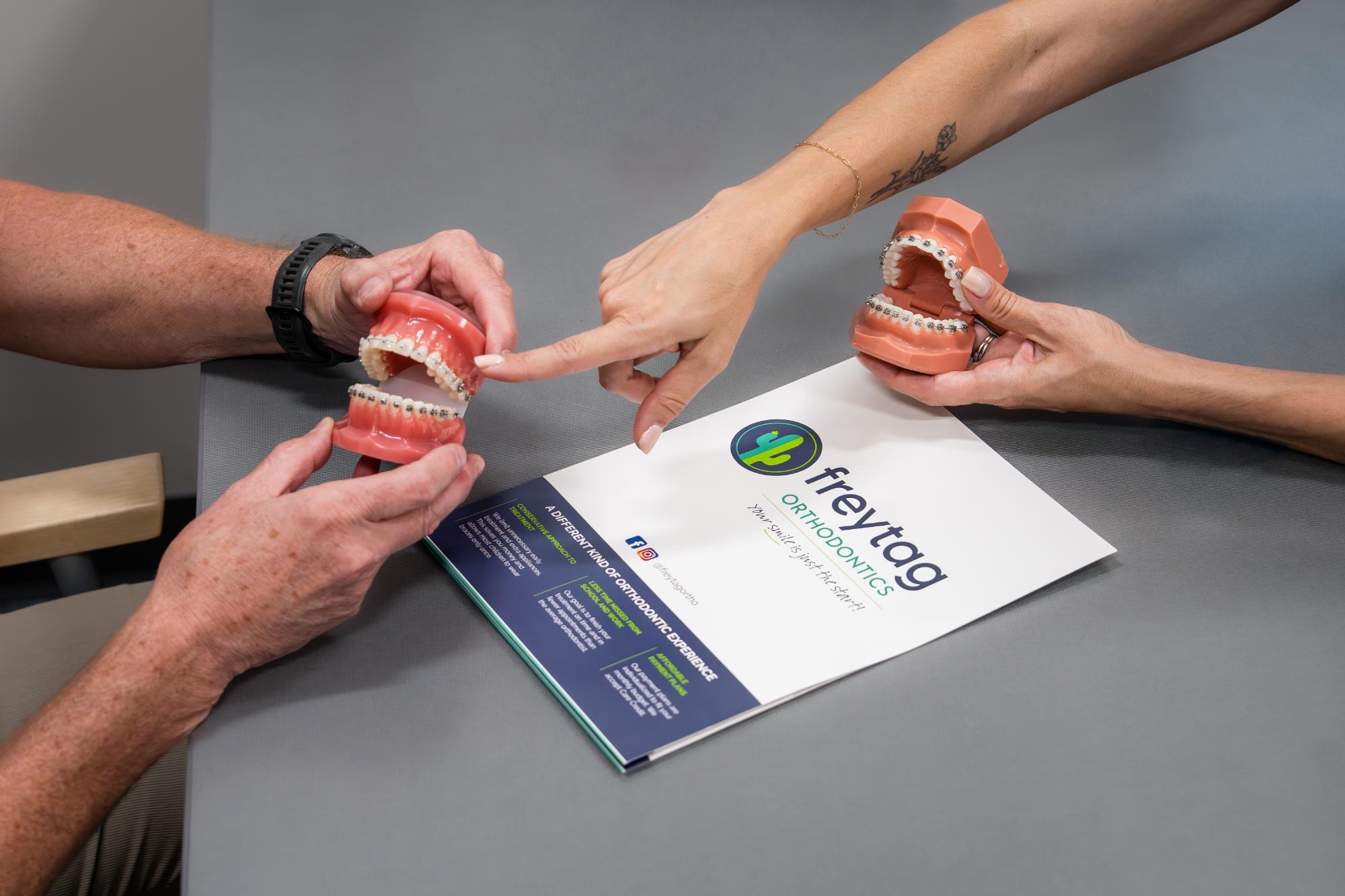
The different parts of braces include brackets, archwires, ligatures, elastic bands, molar bands, buccal tubes, and springs. Each piece works as part of a connected system that applies gentle, steady pressure to move teeth into their ideal position. Brackets anchor to each tooth, wires guide movement, and smaller components fine-tune spacing and bite alignment.
At Freytag Orthodontics, serving Tucson-area families, Dr. Freytag uses these components together for creating beautiful smiles for clients of all ages. This guide breaks down what each part does, why it matters, and how the pieces fit together during treatment.

How the Parts of Braces Work Together
Braces work by combining several small components into one active system that moves teeth over time. Each bracket acts as a handle bonded to a tooth. The archwire runs through those brackets and applies steady pressure. Ligatures, elastics, and molar bands hold everything in place while directing that pressure where it’s needed.
Here’s how each part contributes:
- Brackets bond directly to the front of each tooth and hold the archwire in position.
- Archwire threads through every bracket and delivers the gentle force that guides teeth into alignment.
- Ligatures are the tiny rubber or wire ties that secure the archwire to each bracket.
- Elastics (rubber bands) stretch between upper and lower brackets to correct bite issues like overbites or underbites.
- Molar bands wrap around the back molars and give the appliance a strong anchor point.
- Springs and separators create space between teeth or close gaps as needed.
Roughly every few weeks [STAT_NEEDED], Dr. Freytag adjusts these parts to keep treatment progressing. Small changes to the wire or elastics shift the force in a new direction, moving your teeth one step closer to their final position.
The Main Components of Braces Explained
Understanding the individual parts helps you take better care of your braces and know what to expect at each appointment.
What Are Brackets?
Brackets are the small squares bonded to the front of each tooth. They’re the anchor points for the entire system. Freytag Orthodontics offers a few different braces bracket types, including traditional stainless steel braces and ceramic braces that blend with the color of your teeth.
What Is the Archwire?
The archwire is the thin metal wire that runs across all your brackets. It’s the driving force behind tooth movement. Your orthodontist changes the archwire braces use at different stages of treatment, starting with thinner, flexible wires early on and moving to thicker, stronger wires as your teeth align. These different braces wires stages allow for controlled, predictable movement.
What Are Ligatures?
Ligatures are the tiny elastic rings or wire ties that hold the archwire in each bracket. Those colored rings you see on braces are ligatures. Kids and teens often pick fun colors at each visit.
What Are Elastics (Rubber Bands)?
Elastic bands hook between upper and lower brackets to correct bite alignment. They’re removable and worn as directed. Consistency is key here, wearing them as prescribed makes a real difference in results.
What Are Molar Bands and Buccal Tubes?
Molar bands are metal rings that wrap around your back molars, giving the archwire a secure anchor point. Buccal tubes are small attachments welded to those bands that hold the wire in place.
What Are Springs and Separators?
Springs sit on the archwire and either push teeth apart or pull them together. Separators are small rubber pieces placed between molars before bands are fitted, creating just enough space for the band to slide on comfortably.
Metal vs Ceramic vs Clear Aligner Components
Not all braces use the same parts. Here’s how the components compare across the three main orthodontic treatment options at Freytag Orthodontics.
| Component | Metal Braces | Ceramic Braces | Invisalign |
|---|---|---|---|
| Brackets | Stainless steel, silver | Tooth-colored ceramic | None |
| Archwire | Metal wire, visible | Metal wire, less visible | None |
| Ligatures | Colored elastic ties | Clear or tooth-colored ties | None |
| Elastics | Yes, when needed | Yes, when needed | Yes, with attachments |
| Visibility | Most noticeable | Blends with teeth | Nearly invisible |
| Durability | Very high | High, less stain-prone | High with proper care |
Metal braces are the classic choice, with a modern twist thanks to smaller, sleeker brackets than years past. They’re durable and effective for many cases.
Ceramic braces use tooth-colored brackets that blend in with your smile. Teens and adults love them because they’re less noticeable than metal.
Invisalign skips brackets and wires entirely. Instead, you wear a series of custom clear trays that gradually shift your teeth. Small tooth-colored attachments may be added for certain movements.

What Affects the Cost of Braces Components
The cost of braces comes down to three main drivers: bracket material, the number of extra appliances involved, and the complexity of your case. Ceramic braces typically cost more than metal because of the materials involved. Extra appliances like palatal expanders, springs, or additional elastics add to your total. Cases needing more parts and longer treatment naturally cost more than straightforward alignment.
If a braces bracket came off between visits, replacement may involve a small fee depending on the circumstances. Broken brackets slow down treatment, so calling the office right away helps keep things on track.
Freytag Orthodontics offers affordable payment options, including interest-free financing and no-down-payment plans. During your free exam, Dr. Freytag reviews your case and gives you a personalized plan with a predictable treatment roadmap, so there are no surprises.
Who Needs Which Braces Components
Every smile is different, which is why Dr. Freytag customizes the components used for each client.
- Elastics are added when correcting an overbite, underbite, or crossbite. They apply directional force that brackets and wires alone can’t provide.
- Palatal expanders are common for kids and teens with narrow arches or crowding. They widen the upper jaw before all permanent teeth come in.
- Springs work well for closing gaps between teeth or creating space where crowding exists.
- Molar bands are used in cases that need strong anchorage, especially when other appliances like expanders or headgear are involved.
- Ceramic brackets are a great fit for teens and adults who want a more discreet look.
At your free exam, Dr. Freytag evaluates your teeth, bite, and goals to recommend the exact components your treatment needs. Understanding these parts is a great first step, and meeting with Dr. Freytag is the natural next move when you’re ready to explore what your smile needs. Whether you’re weighing metal braces, ceramic braces, or Invisalign, the right combination of components can create a smile you’ll absolutely love and help you smile with confidence for years to come.
Frequently Asked Questions About Parts of Braces
What is the last bracket on braces called?
The last attachment on the back molars is called a buccal tube. It’s welded to a molar band and acts as the anchor point where the archwire ends. Buccal tubes hold the wire securely in place and allow the archwire to guide the movement of your entire arch.
What do I do if a braces bracket comes off?
If a braces bracket came off, don’t panic. Save the bracket if you can and contact Freytag Orthodontics to schedule a repair visit. In the meantime, if the bracket is still attached to the wire, leave it in place. When it’s causing irritation, cover it with orthodontic wax. Avoid hard or sticky foods until it’s repaired.
What are the different braces wire stages?
Treatment usually involves several archwire changes. Early stages use thin, flexible wires that gently guide teeth into rough alignment. Middle stages use slightly thicker wires with more strength. Final stages use rectangular, rigid wires that fine-tune root position and bite. Each wire stage builds on the last to complete your smile.
What are ligatures and why do they change color?
Ligatures are the tiny elastic rings that hold the archwire to each bracket. They’re changed at every adjustment appointment because they lose their stretch over time. Clients can pick new colors at each visit, which is one of the fun parts of getting braces for kids and teens.
How many brackets are on a full set of braces?
A full set of braces typically includes around 20 brackets [STAT_NEEDED], one bonded to each tooth from second molar to second molar. The exact number depends on how many teeth are being treated and whether molar bands are used instead of brackets on the back teeth.
What is a buccal tube on braces?
A buccal tube is a small metal attachment on the outside of your back molars. It replaces a bracket on that tooth and holds the end of the archwire. Buccal tubes are usually attached to molar bands and provide the strong anchorage needed for the whole system to work. When you’re ready to start your smile journey, a free exam with Dr. Freytag is the best way to see which components fit your smile.

Explore Braces With a Tucson Orthodontist
If you’re considering braces for yourself or your child, Freytag Orthodontics provides personalized orthodontic care for Tucson-area families. Our team offers metal braces, clear braces, Invisalign, and other orthodontic treatment options for children, teens, and adults.
Schedule a free consultation to meet Dr. Freytag and learn which orthodontic treatment may be right for your smile.