Watching your child’s smile change from baby teeth to permanent ones is exciting, and sometimes a little nerve-wracking. You might wonder if their teeth are coming in straight, if their bite looks right, or when you should have someone take a closer look. The good news? There’s a clear answer, and it comes earlier than most parents expect.
At Freytag Orthodontics, we believe early awareness sets the stage for healthy, confident smiles. Here’s what you need to know about that first orthodontic visit at age 7.
Why Age 7 Is the Right Time for a First Orthodontic Evaluation
The American Association of Orthodontists (AAO) recommends that every child receive a first orthodontic evaluation by age 7. This isn’t because most 7-year-olds need braces. It’s because this is the ideal age to spot potential concerns while there’s still time to guide growth naturally.
By age 7, your child is in what we call “mixed dentition.” Baby teeth and permanent teeth exist side by side. The first permanent molars and front incisors have usually erupted, giving Dr. Freytag a preview of how the adult smile is developing. The jaw is still actively growing, which opens the door to developmental guidance that isn’t possible once growth slows down.
Early evaluation catches issues before they become complex. Crowding, bite problems, and jaw discrepancies are much easier to address when the bones are still shaping. That’s why Freytag Orthodontics offers a free exam for children this age. It’s a low-pressure way to get answers.
What Happens During Your Child’s First Orthodontic Visit
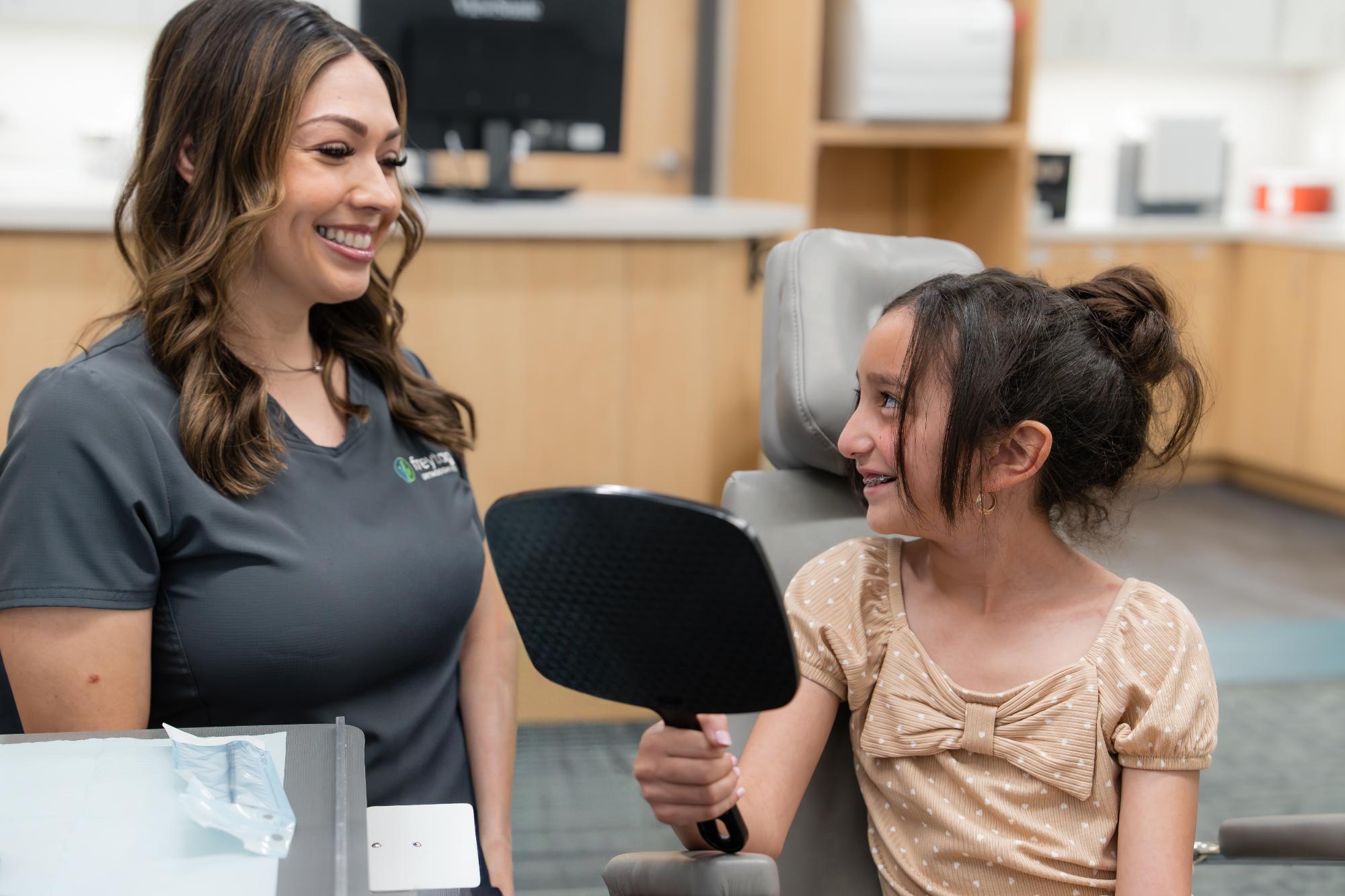
Your child’s first visit to Freytag Orthodontics is friendly, unhurried, and completely non-invasive. Most appointments last 45 to 60 minutes. Here’s what you can expect from start to finish.
- Warm welcome and history review. Our team greets your family and walks through your child’s dental and medical history. If your child feels nervous, we take the time to help them settle in.
- Visual exam. Dr. Freytag carefully examines your child’s teeth, gums, bite alignment, and jaw growth. This part is quick and painless, and we explain each step so your child feels included.
- Digital imaging when needed. If we need a closer look at unerupted teeth or jaw development, we may take digital X-rays or a 3D scan. Modern imaging is fast, low-radiation, and easy for kids to sit through.
- Habit discussion. We ask about oral habits that can affect development, like thumb sucking, mouth breathing, or tongue thrust. These conversations help us understand the full picture.
- Findings review with parents. Once the exam is complete, Dr. Freytag sits down with you to explain what we found. You’ll get a clear, personalized plan with a predicted treatment roadmap and next steps if any are needed.
- Questions and answers. Bring your list. We want you to leave feeling confident about your child’s smile.
There are no shots, no drilling, and no pressure. Just a friendly conversation and a careful look at how your child’s smile is coming along.
Benefits of Early Orthodontic Evaluation
An early evaluation offers benefits that go well beyond straight teeth. When Dr. Freytag can see how a child’s mouth is developing, small adjustments made now can prevent bigger problems later.
Here are the key benefits of an early orthodontic evaluation:
- Detects issues early. Crowding, crossbites, overbites, underbites, and jaw discrepancies are easier to identify when permanent teeth first begin to erupt.
- Guides jaw growth. While bones are still developing, gentle guidance can help the upper and lower jaws grow in better proportion to one another.
- May reduce the need for extractions. Creating space early can mean fewer permanent teeth need to be removed later.
- Can help avoid jaw surgery in some cases. When skeletal issues are addressed during growth, more invasive options later in life may become unnecessary.
- Shortens Phase 2 treatment. If braces or Invisalign are needed as a teen, the total time in treatment is often shorter because the foundation was set early.
- Supports self-esteem. School-age children are aware of how their smile looks. Addressing concerns early can support confidence during important years.
- Simplifies future treatment. Preventive guidance now often means a simpler, shorter path if treatment is needed down the road.
Not every child will need early treatment. But knowing where things stand gives you peace of mind and a clear roadmap for the future.

Three Possible Outcomes: Monitoring, Phase 1, or Future Planning
After the first evaluation, one of three things will typically happen. The majority of children fall into the monitoring group, meaning no immediate treatment is needed. Here’s a look at each possible outcome so you know what to expect.
| Outcome | Timing | Typical Appliances | Goal |
|---|---|---|---|
| Monitoring Phase | Checkups every 6-12 months | None | Watch growth and eruption; act only if needed |
| Phase 1 (Interceptive) Treatment | Ages 7-10 | Palatal expander, partial braces, space maintainers | Guide jaw growth and correct developing bite issues |
| Future Treatment Planning | Wait until more permanent teeth erupt (usually ages 11-13) | Full braces or Invisalign later | Address alignment once the adult dentition is more complete |
Monitoring is the most common outcome. Dr. Freytag will simply check in periodically to track your child’s growth. If anything changes, we’ll be ready to act at the right moment.
Phase 1 treatment is recommended when a specific issue needs early intervention. This might involve a palatal expander to widen a narrow upper jaw, or partial braces to correct a developing crossbite. Phase 1 is short and targeted.
Future planning applies when your child’s teeth and jaw are developing well but will benefit from treatment down the road. There’s no rush, just a plan.
Signs Your Child May Need an Orthodontic Evaluation
Even without symptoms, every child should have an evaluation by age 7. But certain signs may indicate a stronger need for a closer look. Watch for these red flags:
- Crowded, overlapping, or protruding teeth as adult teeth come in
- Early or late loss of baby teeth compared to typical timing
- Difficulty chewing, biting, or speaking clearly
- Mouth breathing or snoring, especially at night
- Jaw shifting, clicking, or asymmetry when your child bites down
- Prolonged thumb sucking or pacifier use past age 4
- Teeth that don’t meet properly or meet in an unusual way
- Cheek biting or the tongue frequently pushing against front teeth
If you notice any of these, it’s a good idea to schedule an evaluation sooner rather than later. Even one visit can bring clarity and put your mind at ease.
Frequently Asked Questions About Age 7 Orthodontic Evaluations
Should a 7-year-old go to an orthodontist?
Yes. The American Association of Orthodontists recommends that every child have a first orthodontic evaluation by age 7. This doesn’t mean your child will need braces at this age. It simply means an orthodontist can spot developing issues while there’s still time to guide growth naturally. At Freytag Orthodontics, we offer this first visit as a free exam.
What is the “Rule of 7” in pediatric dentistry?
The “Rule of 7” refers to the AAO’s recommendation that children receive their first orthodontic check by age 7. By this age, enough permanent teeth have erupted to give an orthodontist a clear picture of how the smile is developing. It’s a preventive checkpoint, not a treatment milestone.
How long does a braces evaluation take?
A first orthodontic evaluation typically takes 45 to 60 minutes. This includes the welcome, a visual exam, any needed digital imaging, and a full discussion with parents about findings and next steps. It’s a relaxed appointment with plenty of time for your questions.
Is 7 too early for braces?
For most children, yes. Most 7-year-olds don’t need braces. The evaluation at this age is about observing growth and catching potential issues early. If treatment is recommended, it’s usually a short, targeted Phase 1 that helps guide development, not a full set of braces on every tooth.
Will my child need X-rays at the first visit?
Not always. Dr. Freytag will only recommend X-rays or a 3D scan if they’re needed to see unerupted teeth or check jaw development. Modern digital imaging is fast, low-radiation, and easy for children to sit through. If imaging isn’t necessary, we skip it.
How can I help my nervous child prepare for the appointment?
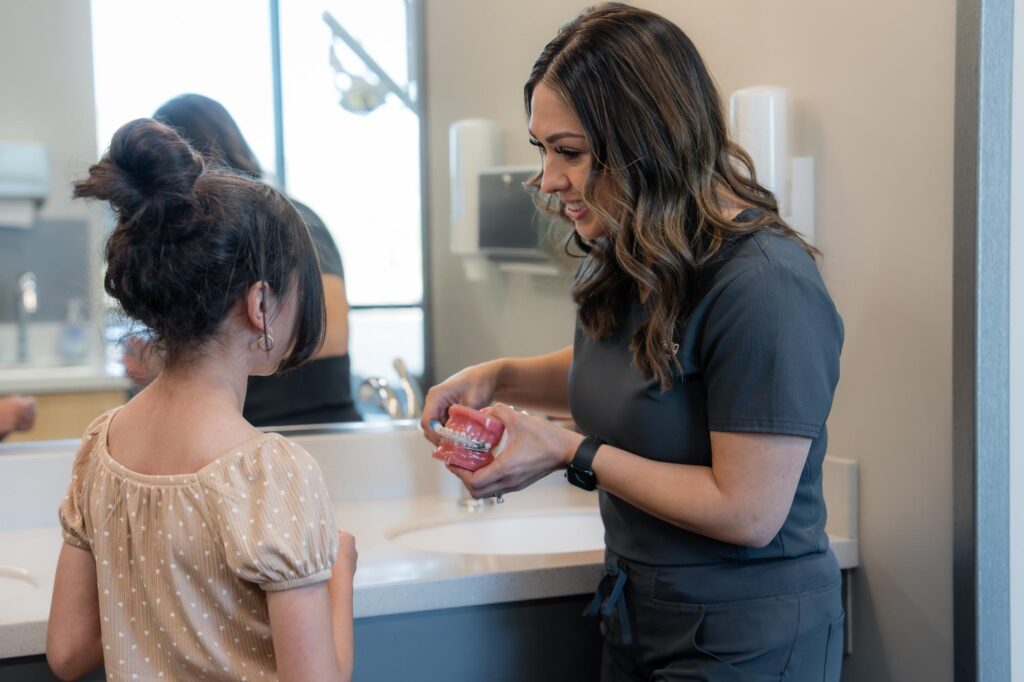
Keep the conversation positive and low-key. Explain that the visit is just a look, with no shots or drilling. You can also let your child bring a favorite comfort item. Our team is experienced with first-time visitors and takes the time to help every child feel at ease. Many kids leave excited about their new team of smile helpers.
Start Your Child’s Smile Journey with Freytag Orthodontics
Your child’s smile is just the start of a lifetime of confidence, and getting an early evaluation is one of the simplest ways to set them up for success. Whether your child needs monitoring, Phase 1 treatment, or a plan for the future, Dr. Freytag and our team will walk you through every step with warmth and clarity.
We invite families in Oro Valley, Marana, and the greater Tucson area to schedule a free exam. There’s no pressure, no obligation, and plenty of time for your questions. Let’s start your child’s smile journey together.